
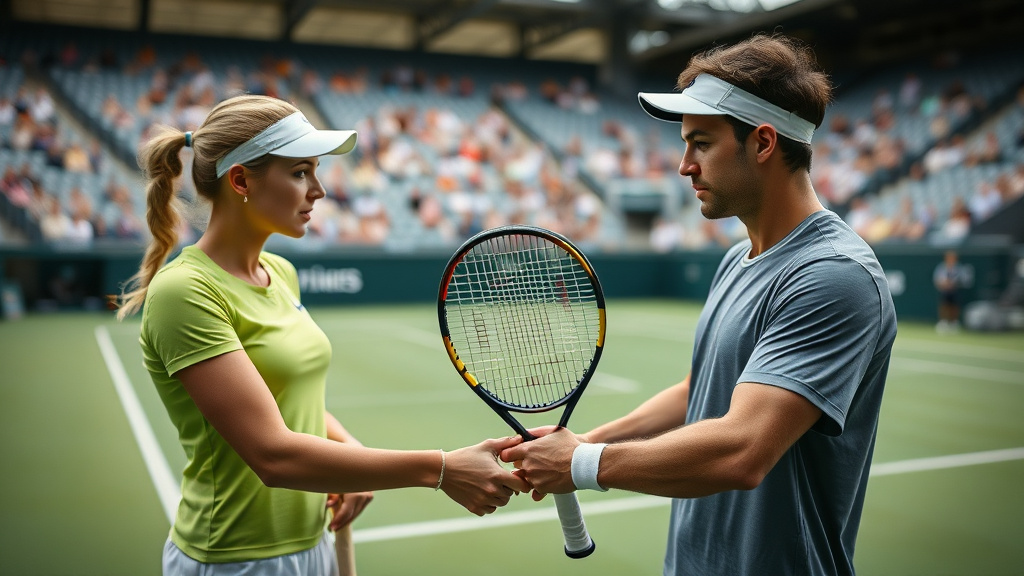
Grand Slam tournaments embody the apex of professional tennis, where champions are crowned and legacies are forged. Yet below the polished exterior lies an profound emotional battlefield. Elite players experience intense pressure, self-doubt, and dread of losing that can undermine even the most proficient athletes. This article examines how mental toughness training—including visualization techniques, mindfulness, and reframing strategies—equips tennis professionals to manage their emotional responses, maintain focus when facing intense demands, and ultimately achieve peak performance when it matters most.
Exploring Mental Resilience in Professional Tennis
Understanding Psychological Strength in Tennis
Mental resilience in professional tennis refers to an athlete’s capacity to sustain focus, composure, and confidence when confronting adversity during competitive matches. It involves the psychological strength to recover from defeats, such as surrendering a key set or encountering a formidable opponent. For tennis professionals, resilience is not merely about athletic conditioning but about developing an steadfast psychological strength that allows players to navigate the mental turbulence intrinsic to professional sports. This mental quality distinguishes champions from contenders.
The demands of significant tournaments amplify the necessity for psychological strength substantially. Players compete across multiple matches spanning weeks, each requiring optimal mental and physical capabilities. The mounting pressure of constant travel, media scrutiny, and demands by sponsors and supporters creates a pressure cooker environment. Psychological strength allows professionals to separate themselves from distractions, maintain perspective during losing streaks, and sustain motivation through grueling tournaments. Without this psychological foundation, even more skilled players may crumble under pressure.
Research in sports psychology has repeatedly shown that mental resilience is a developable competency rather than an innate trait. Athletes can cultivate and improve their resilience through deliberate practice and targeted interventions. Mental training programs have become integral components of professional tennis development, in conjunction with physical conditioning and technical coaching. By recognizing resilience as a trainable ability, players gain agency over their psychological performance and can strategically enhance their competitive standing.
The Emotional Pressures of Elite Competitions
Premier tournaments introduce distinct mental pressures that differentiate them from regular tour events. The greater media exposure, legacy weight, and career-defining implications create unprecedented pressure. Players must manage heightened anxiety, perfectionism, and fear of disappointing themselves and their coaching staff. Additionally, the lengthy event schedule necessitates ongoing emotional stamina and emotional regulation across numerous contests, amplifying mental exhaustion and vulnerability to performance decline.
The high-stakes nature inherent in elite tennis tournaments intensify uncertainty and worst-case scenario thinking. Competitors may dwell on feared results rather than emphasizing present-moment performance. This cognitive disruption can result in attention deficits, hasty choices, and emotional volatility during high-pressure situations. Grasping these psychological dynamics is essential for creating robust psychological coping mechanisms that address the particular challenges inherent to elite tennis’s major tournaments.
Core Strategies for Building Mental Strength
Mental resilience training covers a mix of research-supported techniques intended to enhance mental toughness in demanding situations. These approaches help professional tennis players cultivate mood management, stay concentrated during high-stakes points, and channel stress into competitive advantage. By regularly training these techniques during training and competition, athletes create neural pathways that facilitate best results when dealing with elite-level competition and career-defining matches.
Visual Imaging and Mental Visualization
Visualizing performance includes mentally practicing winning match situations prior to competition on court. Elite tennis players utilize comprehensive visualization to simulate pressure situations, opponent strategies, and winning outcomes. This approach stimulates the corresponding neural circuits as physical practice, improving confidence and performance decisions. By regularly envisioning successful serves, important break points, and championship wins, professionals create mental frameworks that guide their execution during actual championship matches.
Advanced mental imagery goes further than simple success imagery to encompass adversity scenarios. Players practice mentally recovering from setbacks, managing frustration, and executing strategies when behind in sets. This preparation strengthens mental toughness by acquainting the brain with challenges before they occur. When players encounter real pressure situations during major championships, their brains identify known patterns, reducing anxiety and enabling poised, strategic reactions.
Managing Stress and Breathing Exercises
Structured breathing practices offer instant physical balance during high-stress moments. Box breathing—taking four-count inhalations, maintaining the breath for four, exhaling for four—activates the parasympathetic nervous system, offsetting the acute stress reaction caused by competitive tension. Tennis professionals use these methods in the intervals between points, when changing ends, and ahead of critical serves, creating a transportable stress control method that sustains ideal focus levels during competition.
Progressive muscle relaxation and mindfulness-based stress reduction enhance breathing work by progressively alleviating physical tension and mental clutter. Players learn to pinpoint stress manifestations—shoulder tightness, shallow breathing, racing thoughts—and apply targeted interventions. Consistent training of these techniques during training creates automatic patterns, enabling athletes to tap into calming strategies instinctively when facing elite-level competition demands, maintaining the cognitive sharpness essential for competitive success.
Launching Resilience Building Programs
Tennis organizations and coaching teams globally are increasingly recognizing the essential value of embedding mental resilience training into their skill-building curricula. These extensive programs integrate research-backed mental strategies with tennis-centered contexts, ensuring players build actionable resilience strategies designed for championship environments. Leading tennis academies now allocate significant funding to mental conditioning, recognizing that psychological strength strongly influences tournament performance and long-term career sustainability.
The execution phase begins with one-on-one assessments identifying each player’s unique mental weaknesses and capabilities. Trained sports psychologists partner with coaching teams to develop tailored training frameworks tackling particular performance issues. These interventions generally extend over a period of months, incorporating ongoing sessions that progressively increase in intensity and complexity. Players learn to recognize stress triggers, create coping strategies, and strengthen self-assurance through repeated exposure with demanding pressure situations during practice sessions.
- Set up baseline psychological assessments for all athletes
- Hold regular mindfulness and meditation training sessions
- Simulate competitive pressure situations during practice settings
- Assess advancement through performance metrics and player feedback
- Offer regular support from qualified mental performance specialists
Proper deployment necessitates buy-in from the complete organizational framework, encompassing players, coaches, auxiliary personnel, and administrators. Continuous review and modification of coaching initiatives ensure they remain effective and relevant to evolving championship demands. Organizations implementing comprehensive mental resilience frameworks routinely generate athletes who excel in high-pressure situations, demonstrating measurable improvements in competitive outcomes and overall career longevity.
